Tuesday, March 23, 2010

Shoe of the Month: Slingbacks

Dynamic and sexy, sling backs exude the confidence energy of those who wear them. Find a sling back with a lower heel so they can be worn from day to night. Make sure straps are not too tight, as that could lead to chafing on the back of the heel, and conversely, make sure that they are not too loose, so that straps are not constantly being pulled up. Foot Petals' Strappy Strips, approved by the APMA, ($6.95) can be placed on the inside of the straps to prevent them from cutting into or sliding down the heel.
We recommend Dankso's Rue, pictured above.

Dr. Tina A. Boucher, DPM
Central Connecticut Foot Care, LLC
Meriden, CT Podiatrist
http://www.centralctfootcare.com/
Order your free copy of our books "Why Do My Feet Hurt?" and "Heal My Heel!" today!

Tuesday, March 9, 2010

New Location!

As of March 29, 2010 our new location will be 807 Broad Street, Meriden, CT. Our phone number will remain the same.

With easy access to I-691, I-84, I-91, Rts. 15 and 5, it has never been more convenient to visit our office! With fourteen parking spaces in the rear, you never have to worry again about where you are going to park. There are three treatment rooms, on-site digital x-rays, a dedicated product/shoe room, and so much more space!

We cannot wait to serve you in our new office!

Dr. Tina A. Boucher, DPM
Central Connecticut Foot Care, LLC
Meriden, CT Podiatrist
http://www.centralctfootcare.com/
Order your free copy of our books "Why Do My Feet Hurt?" and "Heal My Heel!" today!
Wednesday, February 3, 2010

E-mail winner #2

Congrats to Celeste M. week 2 winner of our e-mail contest! Your Ruby Tuesday's gift card is in the mail.

Dr. Tina A. Boucher, DPM
Central Connecticut Foot Care, LLC
Podiatrist
http://www.centralctfootcare.com

Thursday, January 28, 2010

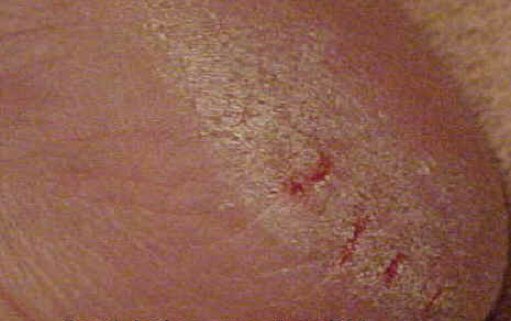
Dry Winter Cracked Heels

During the winter our skin is generally drier and itchier. Our feet are not exempt from this problem. Many people get cracked heels, also known as heel fissures, during this time of year. Cracked heels are generally not a serious condition, but if the cracks go deep enough, they can become painful to stand or walk on, with the potential for bleeding.
Dry skin, or xeorsis, can be aggravated by wearing open backed shoes, weight increases, or increased friction from your shoes. Cracked, dry skin can also be a sign of diabetes or neuropathy. Other causes of cracked heels are standing on your feet for long periods of time, and skin conditions like eczema. There are often calluses and a yellow or brown ring around the heel. As we age, compounded with the previously mentioned factors, the fat pad between our bones and skin deteriorates and moves sideways, giving us less protection where we need it the most.
What can you do at home to help your cracked heels? If the condition is not serious, you can use a pumice stone to remove some of the dead skin. Applying a good, oil-based moisturizer regularly will provide immediate relief. Try to eliminate open backed shoes from your wardrobe and never do "bathroom surgeries" with sharp knives or razors as this is an easy way to get an infection.
For cases that are serious, here at Central CT Foot Care Center we can debride the thick skin. We will advise you on proper footwear and may recommend orthotics or inserts to help if your fat pad is wearing away. A prescription for a moisturizer may be prescribed and we may strap the heel while the cracks are healing.

Dr. Tina A. Boucher, DPM
Central Connecticut Foot Care, LLC
Podiatrist in Meriden CT
http://www.centralctfootcare.com/
Order your free copy of our books "Why Do My Feet Hurt?" and "Heal My Heel!" today!

Wednesday, January 20, 2010

Weekly Winner of E-mail Drawing

Congrats to Lauren S., our 1/15/2010 winner! Your gift card to Ruby Tuesdays will be in the mail within the week.

Dr. Tina A. Boucher, DPM
Central Connecticut Foot Care, LLC
Podiatrist
http://www.centralctfootcare.com

What is Barefoot Running?

There has been quite a bit of talking lately in the running world about running without shoes, or barefoot. Those who run barefoot are choosing hard surfaces, like pavement, over softer surfaces like sand or grass. Our ancestors ran barefoot for many years without anything covering their feet. Today, runners are choosing barefoot running to relieve chronic injuries they incur over time.

When we run with shoes, our shoes force us to land on our heel instead of the ball of our foot, which is the natural way to run and land. The arch of our foot and our lower leg cannot fully absorb the shock the way the ball of our foot can. The shock then instead travels up our heel, through our legs and to our hips. It is possibly a reason why so many runners get shin splints, heel pain, and other problems because of the way we land in shoes.

Barefoot running uses our natural way of moving to propel ourselves off the ground and then again when we land. When you push off the ground with the ball of your feet you will land with your feet directly under your hips, as they should be.

For more information on barefoot running, please see: http://www.vibramfivefingers.com/UserFiles/File/Wall_Street_Journal6-6-2006.jpg and


Dr. Tina A. Boucher, DPM
Central Connecticut Foot Care, LLC
Podiatrist in Meriden CT
http://www.centralctfootcare.com/
Order your free copy of our books "Why Do My Feet Hurt?" and "Heal My Heel!" today!

Wednesday, December 16, 2009

What Can My Doctor Do For Heel Pain?

Plantar fasciitis, or heel pain, is commonly traced to an inflammation on the bottom of the foot. Our practice can evaluate arch pain, and may prescribe customized shoe inserts called orthoses to help alleviate the pain.
Plantar fasciitis is caused by inflammation of the connective tissue that stretches from the base of the toes, across the arch of the foot, to the point at which it inserts into the heel bone. Also called "heel spur syndrome", the condition can usually be successfully treated with conservative measure such as use of anti-inflammatory medications and ice packs, stretching exercises, orthotic devices, and physical therapy.

We can do:

  • Extracorporeal shock wave therapy
  • Cryotherapy
  • Laser therapy
  • Physical therapy
  • Orthotics
  • And much more!
Dr. Tina A. Boucher, DPM
Central Connecticut Foot Care, LLC
Podiatrist in Meriden CT
http://www.centralctfootcare.com/
Order your free copy of our books "Why Do My Feet Hurt?" and "Heal My Heel!" today!